

Your institution probably spent six figures on a CRM platform. Your team spent months in implementation. Leadership signed off. IT integrated it. The vendor delivered training.
And somewhere between go-live and today, it quietly became shelfware.
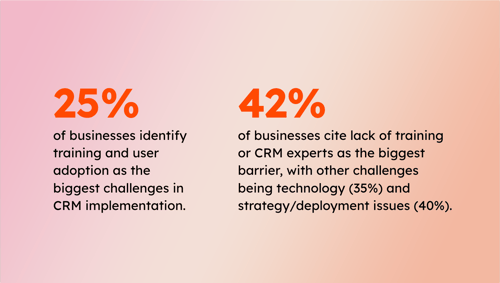
This isn't a rare outcome. 42% of financial institutions cite lack of training or CRM expertise, not the wrong technology, not a bad vendor, as their biggest barrier to CRM success (source: CRM.org). The platform works. The people don't use it the way it was designed to be used. And so the ROI that justified the purchase never materializes.
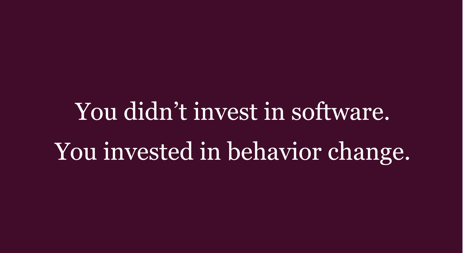
Here's the reframe that changes how you approach this: when you signed that contract, you didn't buy software. You bought a behavior change. The platform is neutral. It doesn't deepen member relationships or surface cross-sell opportunities. Your people do, when they actually use it, consistently, in the ways it was designed to work.
Watch Now: "Adoption is the New ROI"
That's the conversation GreenHouse Agency brought to the table at our most recent FinSight Forum webinar, "Adoption is the Real ROI: Driving Internal Buy-In Across Your Financial Institution." FinSight Forum is GreenHouse Agency's webinar series for financial services leaders and practitioners, sharing what actually works inside regulated institutions.
This post captures the four pillars we covered, and why each one is critical to turning your CRM from a line item into a true competitive advantage.
The Adoption Crisis in Financial Services
The average credit union operates with 100+ applications in its technology stack (source: Grow Your Credit Union). That's a staggering number, and yet, despite massive investments in platforms like HubSpot, most institutions still struggle to get teams to use any single tool consistently.
It's tempting to diagnose this as a technology failure. The UX is clunky. The integration didn't work as promised. The vendor oversold the onboarding support. And yes, sometimes those things are true.
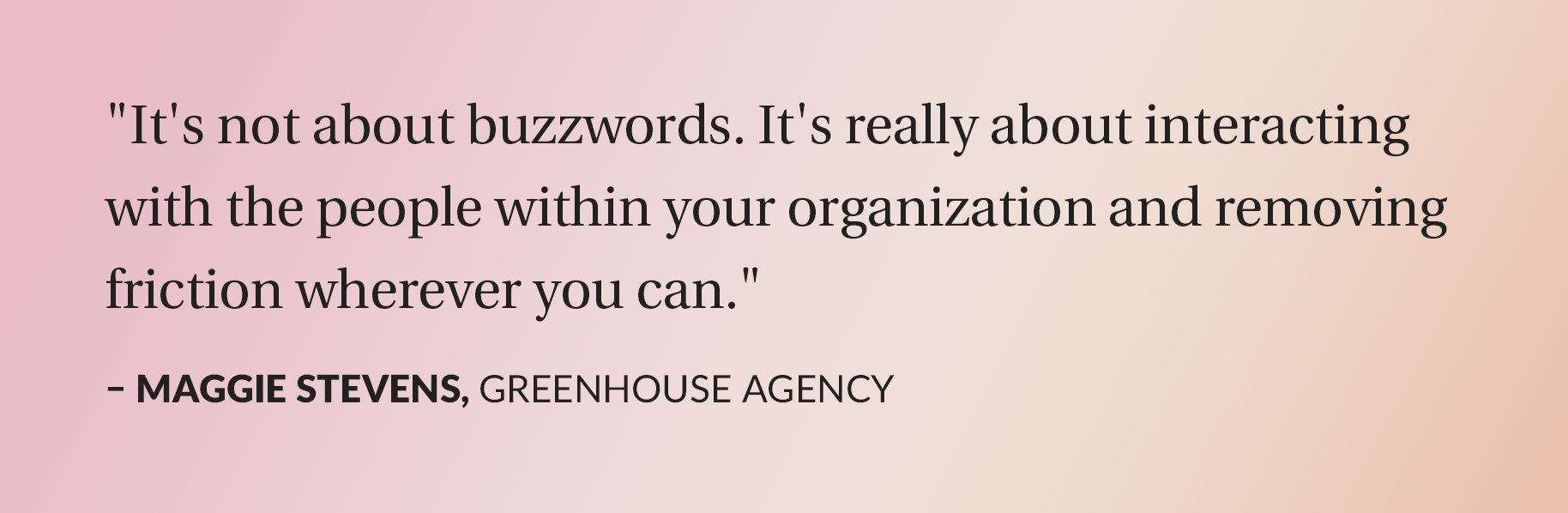
But more often, the gap between a CRM's potential and its actual performance is a people problem. Specifically, it's a habit problem. Daily workflows haven't changed. Managers aren't reinforcing usage. The system isn't embedded into how work actually gets done.
Until organizations address that reality head-on, no amount of additional features or integrations will move the needle. The ROI is locked behind adoption, and adoption is as much a leadership and change management challenge as it is a technical one.
Pillar 1: Link Adoption to Performance
The most effective cultural shift an institution can make around CRM adoption is deceptively simple: make the system the record of truth.
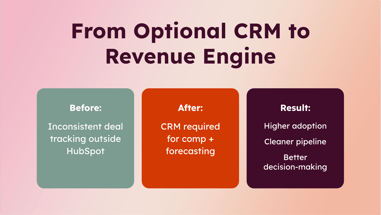
One philosophy we explored during the webinar: "If it's not in HubSpot, it doesn't count." That's not a punitive stance, it's a structural one. When CRM activity is tied to pipeline reporting, compensation structures, and performance reviews, logging deals becomes mandatory. It becomes the baseline expectation.
 This kind of transformation doesn't happen overnight, and it doesn't happen top-down alone. The most successful implementations use a test-pilot-iterate approach to building out deal stages: a small group of engaged users helps define the stages, test the logic, and surface friction points before broader rollout. That process builds ownership. When the people using the tool helped design it, they're far more likely to actually use it.
The result is a system where deal tracking moves from a nice-to-have to an operational essential, not because compliance demanded it, but because the culture evolved around it.
Pillar 2: Replace Static Knowledge with Embedded AI
Ask yourself where your institution's institutional knowledge actually lives right now. For most, the honest answer looks something like this: a Word doc on someone's desktop, a PDF buried in a shared drive, an ungated OneNote notebook that only two people know exists.
That fragmentation is a direct threat to CRM adoption. When team members have to leave the system to find answers, they develop workarounds. And workarounds, over time, become the workflow.
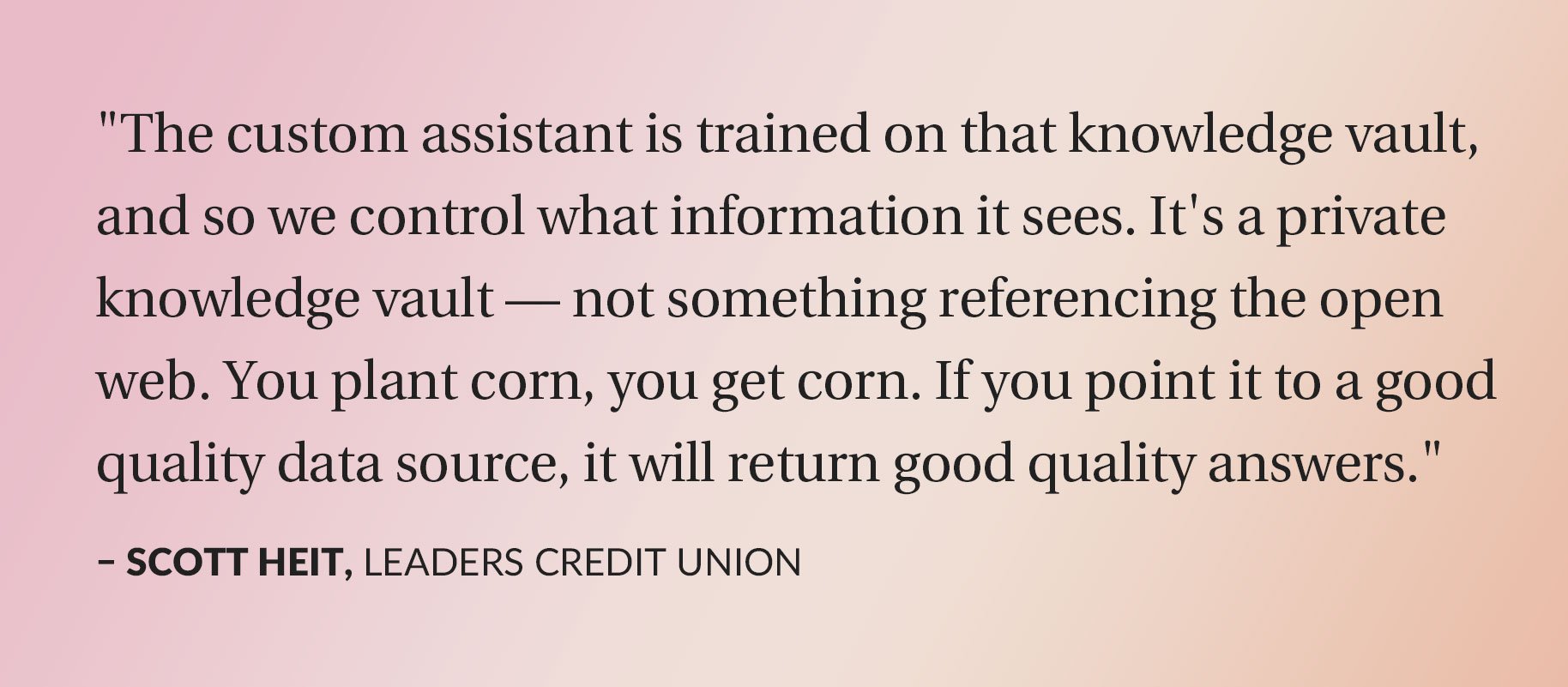
The solution discussed in our webinar: migrate that scattered institutional knowledge into a HubSpot-based Knowledge Base and connect it to Breeze Copilot. Instead of opening a separate application or hunting through folders, team members can ask a question and get an answer without ever leaving the CRM.
For financial institutions, this approach carries an additional benefit that deserves special attention: audit-friendliness. A centralized, permissioned knowledge base means you know exactly who has access to what information, when it was last updated, and who approved it. In a regulated environment, that kind of documentation and control isn't just convenient, it's essential.
When answers live inside the system, people stay inside the system. It's a simple principle with compounding returns.
Pillar 3: Design for the Frontline, Not the Back Office
Friction kills adoption. Full stop.
A CRM designed by administrators for administrators, with every possible field, tab, and compliance checkbox visible at all times, is a CRM that frontline teams will resist. Not because they're resistant to technology, but because the tool is making their jobs harder, not easier.
One concrete example from the webinar illustrates this powerfully: reducing the number of steps required to log a deal from 6 steps down to 2, plus automation. That's not a marginal improvement. For a relationship manager logging deals throughout the day, that's the difference between a tool they trust and a tool they avoid.
Beyond streamlining workflows, thoughtful CRM design also means customizing record views by team and role. A commercial lender doesn't need to see the same fields as a branch operations lead. When HubSpot surfaces the information most relevant to the person actually using it, the system feels like it was built for them, because it was.
This is where the technology and the change management work intersect most visibly. Design choices signal to your team whether leadership understands what their day-to-day actually looks like.
Pillar 4: Stop Measuring Presence, Start Measuring Performance
If your current CRM reporting celebrates high login counts and time-in-system as success metrics, you're measuring the wrong things.
Presence tells you someone opened the platform. It tells you nothing about whether they used it to move a deal forward, identify a cross-sell opportunity, or document a member interaction that will matter in six months. Vanity metrics feel good in a dashboard, but they don't correlate to revenue.
Meaningful adoption measurement looks different. During the webinar, we outlined what to track instead:
- Pipeline velocity: How fast are deals moving through stages?
- Deal progression: Are opportunities advancing, stalling, or disappearing?
- Playbook usage: Are teams following the processes you built?
- CRM activity correlated to closed revenue: Is the behavior you're reinforcing actually driving results?
These metrics connect the tool to the outcome. They allow leaders to have substantive conversations about what's working, what's not, and where to intervene rather than congratulating themselves for high login rates while the pipeline stagnates.
The Platform Doesn't Deliver ROI. The Behavior Does.
The thread connecting all four pillars is the same: your CRM investment returns value in direct proportion to how deeply it's embedded into daily behavior. The technology is a vehicle. Behavior is the fuel.
Tie adoption to performance, and people have a reason to use the system. Embed knowledge inside it, and they have a reason to stay in it. Reduce friction for frontline teams, and you improve CRM usage and drive more meaningful member and customer interactions. Measure what matters, and you'll generate reporting that tells you something worth acting on. That's the framework.
That's the work, and it's what separates a basic CRM implementation from a truly successful HubSpot implementation.
Join Us at the Next FinSight Roundtable
If this conversation resonated, the FinSight Roundtable on June 17 is the right room. It's a smaller format, fewer seats, and more candid conversation. Space is limited. Reach out to our team to register today.
