

Introduction: From Strategy to Setup
Over the past several years, many banks and credit unions have made the strategic decision to centralize their revenue operations inside HubSpot Sales Hub. The promise is compelling: a unified pipeline, clearer forecasting, stronger relationship management, and better alignment between lending, underwriting, and service teams.
But in regulated financial environments, the real challenge isn’t adopting HubSpot. It’s configuring it correctly.
Banks do not operate like traditional sales organizations. They manage sensitive financial data, multi-layered approvals, documentation controls, and strict compliance requirements. A poorly configured CRM doesn’t just create inefficiencies; it introduces operational and regulatory risk.
This guide walks through what a properly configured HubSpot Sales Hub environment should include, serving as a structured checklist for launching or optimizing your setup in a banking context.
Pre-Implementation Planning: Define Before You Build
Before configuring a single field, pipeline, or workflow in HubSpot, leadership must define the operational blueprint. For any bank or credit union, technology should reflect your revenue model, not dictate it.
Start by clearly defining your lending structure. Most financial institutions manage multiple product lines such as commercial lending, mortgage, SBA, specialty lending, and business banking. Each follows a slightly different lifecycle and sales process. Stakeholders evaluating a HubSpot implementation must ensure the CRM mirrors how revenue is actually generated.
It’s also important to define whether your institution operates on a deeply relationship-based model, a transactional approach, or a hybrid of both. This impacts pipeline structure, reporting, automation, and how your sales team manages opportunities inside HubSpot CRM.
Cross-sell motions between teams matter as well. If commercial bankers regularly introduce treasury services, deposit products, or payments, your CRM must provide multi-product visibility across the full sales pipeline. Without that structure, marketing attribution and campaign reporting inside Marketing Hub become fragmented.
Next, document your real-world loan lifecycle in detail. For most banks and credit unions, this includes stages such as inquiry, pre-qualification, credit review, underwriting, conditional approval, documentation, funding, and post-close onboarding. These stages should not be simplified to fit a generic template. They should directly reflect how your lending operation truly functions.
Once defined, these stages can be reinforced with structured workflows and governed automation, ensuring consistency, reporting accuracy, and cross-team visibility across marketing, lending, and service.
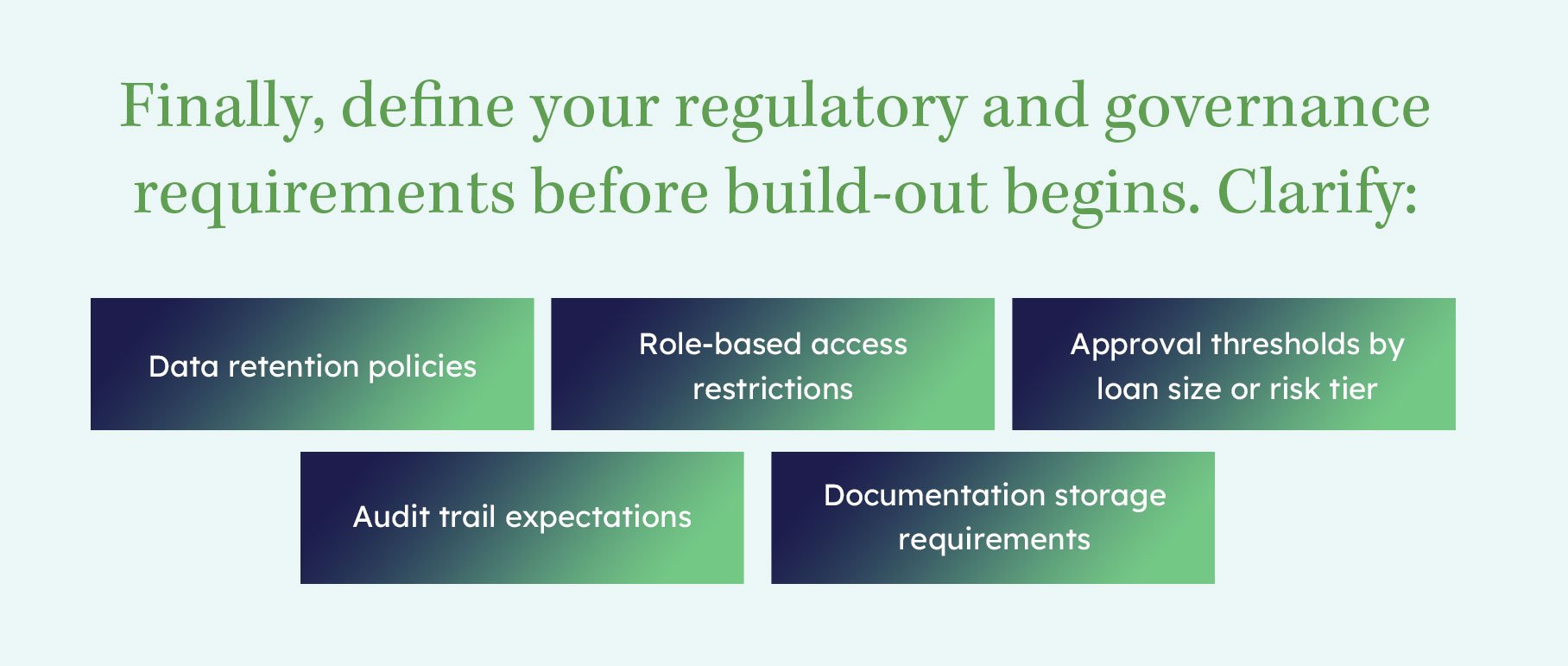
For regulated financial services organizations, governance must be embedded into the architecture from day one. Retrofitting compliance controls after launch is significantly more complex and costly.
For marketing leaders, this planning phase is critical. A well-structured HubSpot Sales Hub environment ensures clean data, reliable attribution, and alignment between marketing initiatives and revenue outcomes, laying the foundation for scalable growth.
Core CRM Architecture Checklist
Once the strategy is defined, architecture becomes the foundation of long-term scalability.
Data Model Configuration
While a banking CRM may require a more intricate data model, Sales Hub implementations primarily focus on the deal object when it comes to managing sales activity and revenue tracking. For banks and credit unions, this typically means structuring the loan pipeline around deals that represent opportunities currently moving through the sales process.
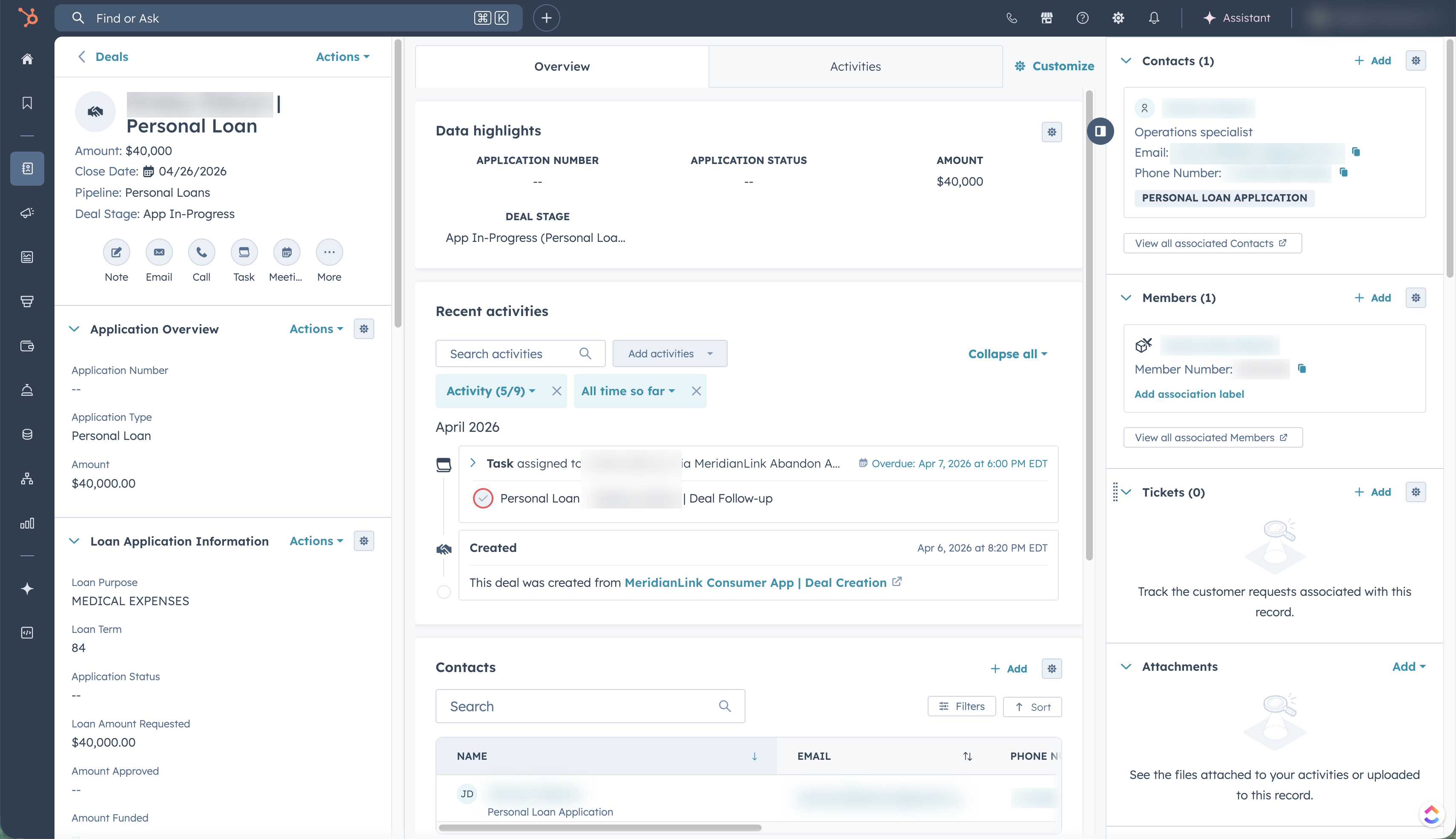
Loan-specific details, such as loan amount, risk rating, collateral type, industry segment, and expected funding date, should be captured as custom properties on the deal record while the opportunity is still in the sales motion. Tracking this information at the deal level allows teams to manage pipeline progress, support forecasting, and maintain visibility into potential revenue tied to lending opportunities.
Configuring these fields correctly ensures lenders and sales teams can track the status of each opportunity while leadership maintains clear insight into pipeline health and expected funding timelines.
Additionally, required fields should be enforced at key pipeline stages. Data validation rules prevent incomplete records from advancing, ensuring clean reporting and reliable forecasting. A disciplined data model prevents downstream reporting chaos.
Pipeline Design by Sales Process
Pipeline structure in HubSpot should reflect the actual sales motion used by the financial institution. In some cases, banks and credit unions may benefit from configuring separate pipelines for distinct sales processes, such as consumer deposits, lending, or mortgages, if each product category follows a different set of stages or approval workflows.
However, if multiple products move through the same deal stages, it may be more effective to manage them within a single pipeline and differentiate opportunities using properties like product type or loan category. This approach keeps reporting and pipeline management simpler while still allowing teams to segment deals as needed.
Regardless of structure, each stage should include clear exit criteria so opportunities only move forward once key requirements are met. When aligned with real workflows, this structure improves pipeline visibility, reporting accuracy, and forecasting for lending teams.
CRM Record Customization and Custom Views
A well-configured HubSpot environment goes beyond capturing the right data. It ensures that data is surfaced in the right way, to the right people, at the right time.
Deal, contact, and company records should be customized so that the most relevant information is immediately visible without requiring users to scroll through irrelevant fields. For financial institutions, this means configuring record layouts so that deal details, relationship history, and pipeline stage information are front and center for the teams who need them. A relationship manager's view of a deal record should look different from an underwriter's view. The key is grouping properties on the record that align with their purpose, ensuring every section of the CRM tells a coherent story rather than presenting data out of context. Each role should see the properties most relevant to their function without distraction from fields that don't apply to their workflow.
Custom views and filtered lists extend this further. Rather than giving every user an identical CRM experience, teams should be able to work from saved views that reflect their specific book of business, assigned deals, or daily priorities. Branch managers can monitor team-wide pipeline health at a glance, while individual relationship managers stay focused on their own active opportunities.
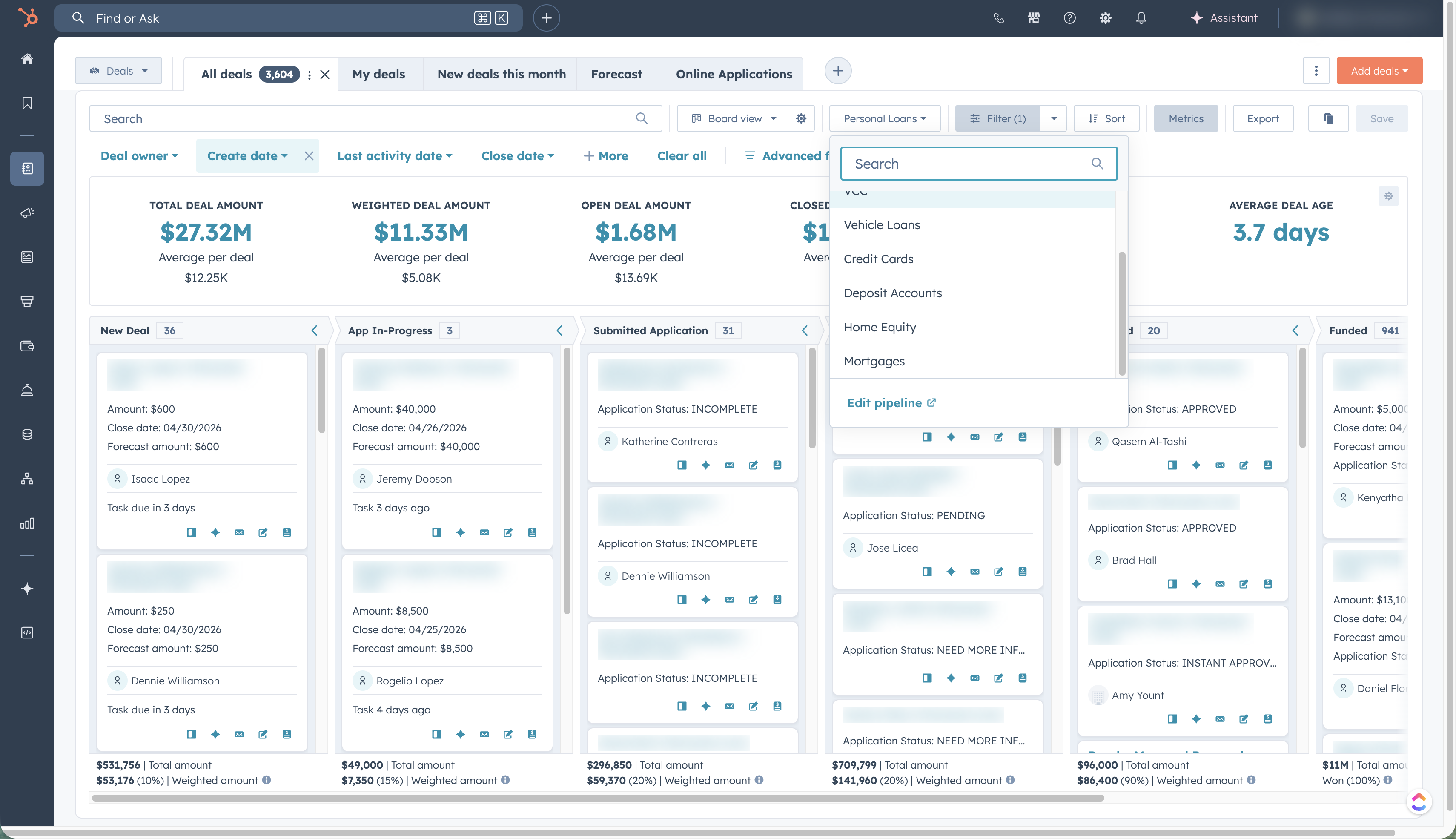
For institutions managing high volumes of member or borrower relationships, these configurations are not cosmetic. They directly impact how efficiently your team works and how consistently data gets entered. When the CRM is organized around how people actually work, adoption improves, and data quality follows.
Role-Based Permissions & Governance
Permissions are not optional in regulated institutions; they’re foundational.
Role-based access should reflect departmental structure, ensuring lenders, underwriters, branch managers, and executives see only what they need. Sensitive financial fields may require field-level permissions. High-value or high-risk loans should trigger structured approval workflows before progressing.
Audit tracking should be enabled to monitor record changes, and multi-branch institutions should implement data segmentation to preserve reporting clarity. A governance-first configuration transforms HubSpot from a sales tool into a controlled financial operations platform.
Automation Setup: Building Structured Efficiency
Automation should enhance discipline, not create shortcuts.
Workflow automation can support structured task assignment for underwriters, trigger automatic document requests, rotate inbound opportunities, and track internal SLAs between sales and credit teams. Escalation workflows can flag stalled deals before they impact quarterly performance.
Approval routing deserves special attention. Conditional logic can trigger multi-level approval chains based on loan size, industry, or risk tier. Notifications should be automated, and in some cases, deal progression should be locked until required approvals are documented.
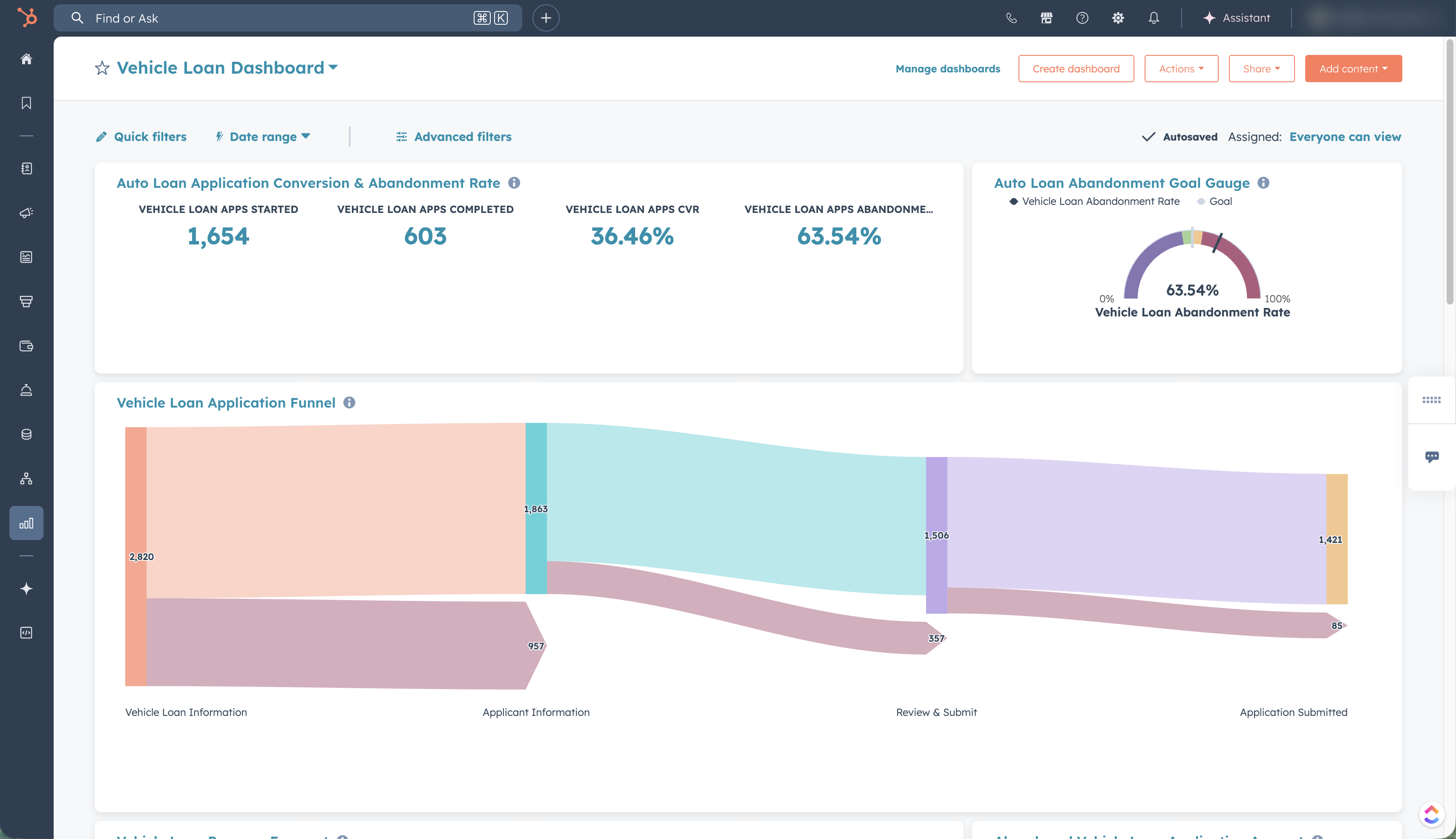
On the reporting side, automation enables real-time dashboards for revenue forecasting, pipeline velocity, loan-to-close ratios, underwriter capacity, and branch-level performance. Accurate automation ensures leadership can trust the numbers they are reviewing.
Sales Enablement & Relationship Manager Setup
Technology should empower relationship managers while reinforcing compliance standards.
One of the most common challenges banks and credit unions raise during discovery is how siloed their sales processes have become. Relationship managers, lenders, and sales teams often track emails, meetings, notes, and follow-ups in separate tools, or worse, in personal systems that no one else can access. This lack of shared visibility makes collaboration difficult and limits leadership’s ability to understand what is actually happening in the pipeline.
HubSpot Sales Hub helps address this by centralizing activity tracking directly within the CRM. Emails can be tracked automatically, calls and meetings can be logged, calendars can be integrated, and notes can be added to records so that every interaction with a prospect or member is captured in one place. Instead of individuals managing these activities independently, the platform creates a shared system of record that gives teams consistent visibility into deal progress and relationship history.
Tools like the Sales Workspace further support productivity by helping representatives manage their day with prioritized tasks, upcoming meetings, and recommended next steps. When combined with features like next-best-action alerts and AI-driven prioritization, these tools make it easier for teams to stay organized and focused on the right opportunities.
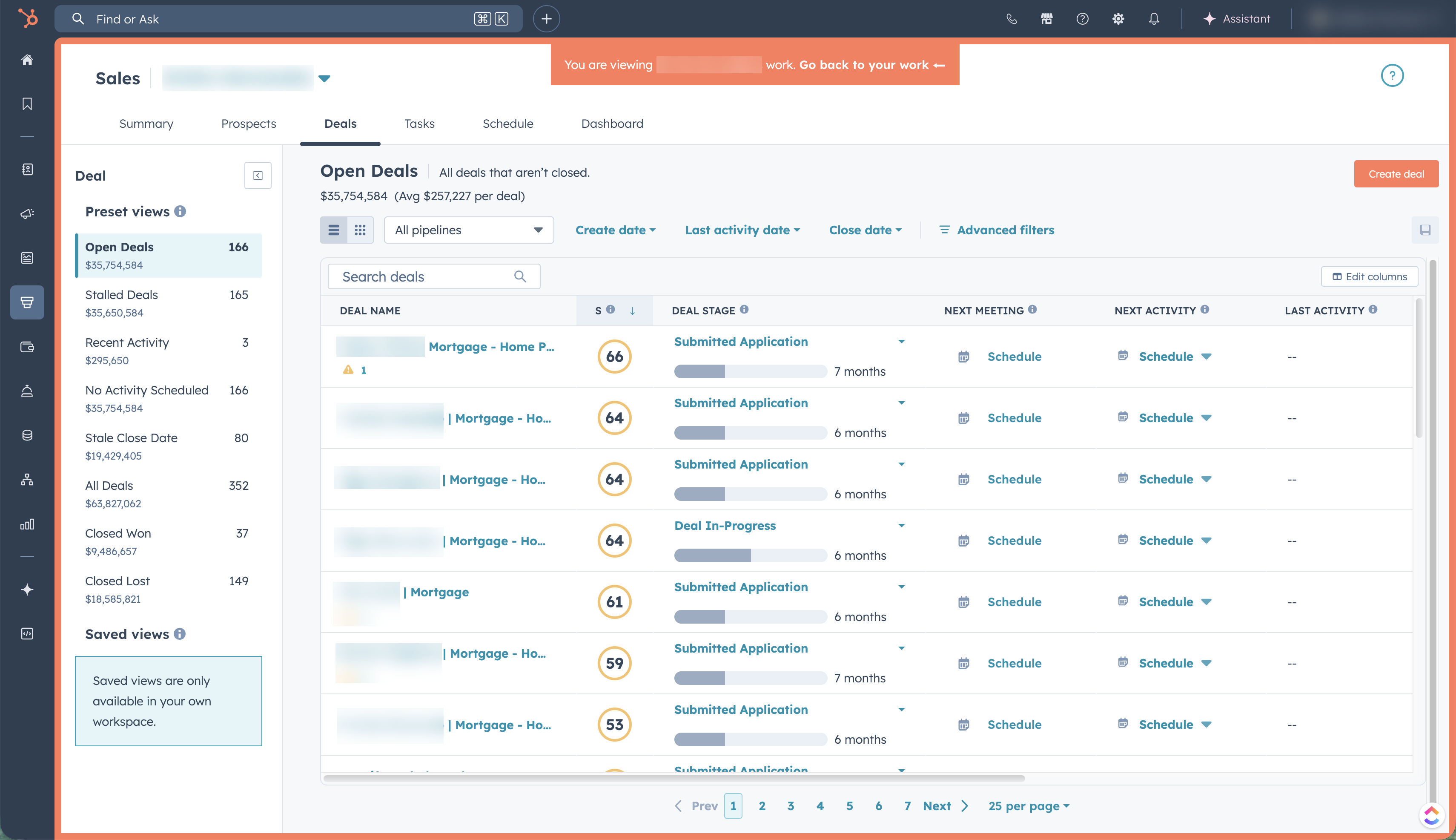
At the same time, visibility does not have to come at the expense of control. HubSpot’s permission settings allow institutions to restrict access where needed, ensuring sensitive information is only visible to the appropriate teams.
Ultimately, the goal is to make following the defined sales process easier than bypassing it while giving teams the transparency they need to collaborate effectively.
Marketing & Service Integration Configuration
One of the strengths of the HubSpot ecosystem is how cross-functional teams can have full visibility… or not, if you want to keep certain properties or tools restricted, which can be controlled with team permissions
On the marketing side, lead scoring models, MQL-to-deal automation rules, and campaign attribution tracking ensure that lending teams understand where opportunities originate. Segmented nurturing workflows can align with product lines such as commercial or mortgage, or help re-engage stale deals that have gone cold before they’re lost.
On the service side, onboarding ticket pipelines, post-close follow-up automation, cross-sell triggers, feedback surveys, and customer health dashboards extend visibility beyond funding. This ensures long-term relationship growth rather than one-time transactions.
Data Migration & System Integration Planning
Migration is often underestimated. Before importing data, institutions should audit legacy CRM records, remove duplicates, and rationalize outdated fields. Clean data migration improves user confidence from day one.
Integration architecture must also be clearly defined. This typically includes loan origination systems (LOS), core banking platforms, and document management systems. API or middleware configurations should be tested in a sandbox environment before full deployment.
Connecting Loan Origination and Application Systems
For many banks and credit unions, HubSpot Sales Hub is not the system used to complete loan applications. Instead, it serves as the relationship and pipeline management layer that sits alongside specialized lending platforms.
This makes integration with loan origination and application systems a critical part of the overall CRM architecture.
Most institutions rely on platforms such as Loan Origination Systems (LOS), Digital Account Opening (DAO) platforms, or Mortgage Origination Systems (MOS) to manage borrower applications, credit data, document collection, and underwriting workflows. When these systems operate independently from the CRM, lenders often resort to manual data entry, spreadsheet tracking, or email updates to keep pipelines current. This creates data inconsistencies, reporting gaps, and unnecessary operational friction.
A properly integrated environment allows key data points from these systems to flow directly into HubSpot. For example, application status changes, borrower information updates, and approval milestones can automatically update corresponding deal records and move them to the correct deal stage. Relationship managers gain visibility into application progress without leaving the CRM, while leadership benefits from more accurate pipeline and revenue reporting. Critically, this integration is also what makes true ROI reporting possible, when closed loans can be tied back to the campaigns, channels, and touchpoints that originated them.

Integration approaches vary depending on the technology stack. Some institutions leverage direct APIs between HubSpot and their LOS platform, while others use middleware or integration platforms to synchronize data between systems. The addition of Data Studio to Data Hub opens a third method to sync data to the CRM via a data warehouse like Snowflake or Databricks. Regardless of the method, the objective is the same: eliminate manual updates while preserving a single, reliable view of the lending pipeline.
When implemented correctly, these integrations allow HubSpot to function as the operational command center for revenue teams, while specialized banking systems continue to manage the deeper underwriting and application workflows they were designed for.
Whenever possible, phased rollouts reduce risk compared to big-bang migrations. Incremental deployment allows teams to stabilize processes before expanding scope.
Change Management & User Adoption Plan
Even the best technical implementation fails without adoption. It is important to note that moving into solid implementation does require a “crawl, walk, run” mentality. While enforcing usage and adoption is critical, too much all at once can be a recipe for disaster. Start with your MVP implementation and then start layering your additional, more advanced items. It's important to pair implementations with training.
Before the crawl, executive sponsorship is critical. Leadership must reinforce that CRM usage is not optional. Role-based training ensures each team understands how HubSpot supports their daily workflow. Internal documentation and ongoing enablement sessions sustain momentum.
Institutions should also monitor adoption dashboards and conduct structured 30-60-90 day reviews to identify optimization opportunities. CRM implementation is an operational transformation, not a one-time project.
Common Setup Mistakes Financial Institutions Should Avoid
Several recurring mistakes undermine otherwise strong implementations.
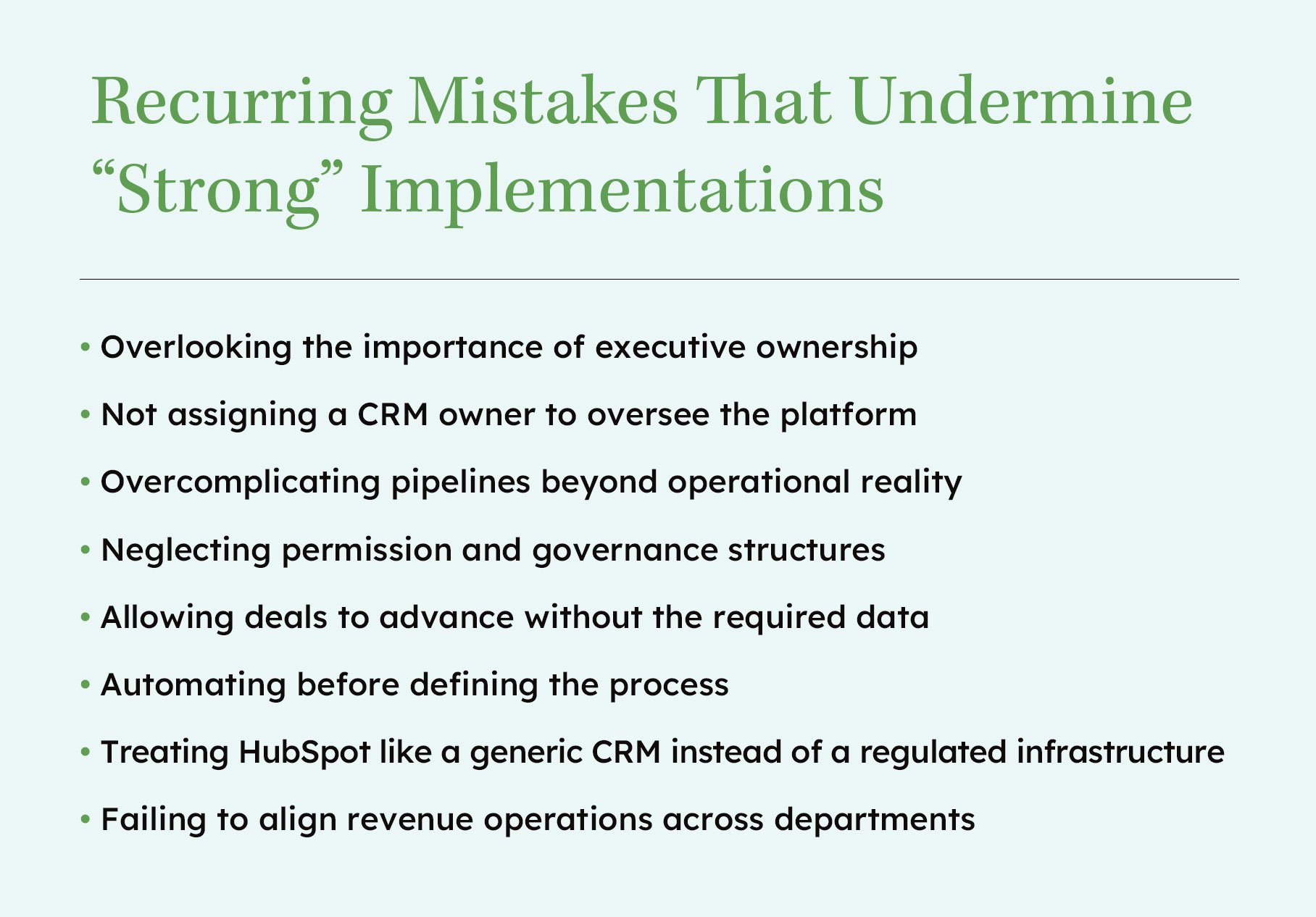
Avoiding these pitfalls dramatically increases long-term success.
When to Bring in a Specialized HubSpot Partner
While some institutions manage implementation internally, complexity often justifies specialized expertise. Multi-entity institutions, heavily regulated lending environments, custom object architectures, and complex integrations typically require deeper technical and strategic experience.
Firms like Greenhouse Agency focus specifically on banking CRM architecture, loan pipeline configuration, governance-first automation, and phased enterprise rollouts. When CRM becomes operational infrastructure, precision matters.
A CRM Is Only as Strong as Its Setup
HubSpot Sales Hub is fully capable of supporting complex financial workflows. However, success depends on structured configuration, disciplined governance, and clear operational alignment.
Banks and credit unions that treat CRM implementation as infrastructure, not simply software, consistently outperform peers in forecasting accuracy, cross-sell growth, and operational efficiency.
Use this checklist to evaluate your current setup, or partner with Greenhouse Agency to build it correctly from day one.
